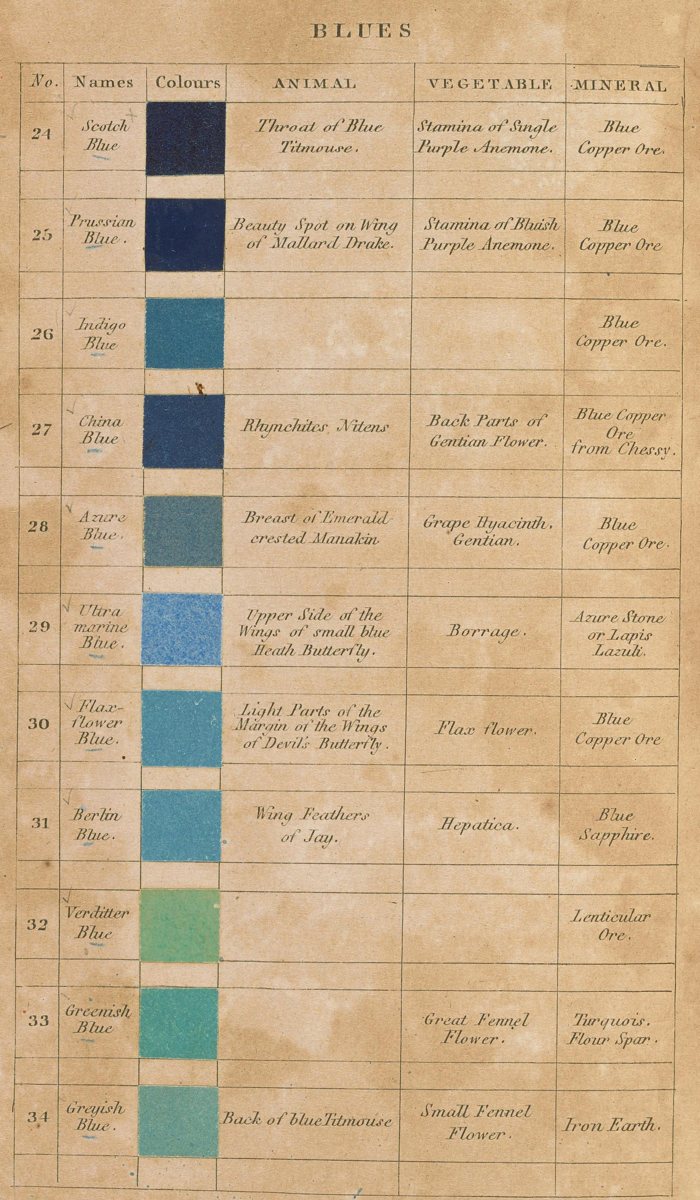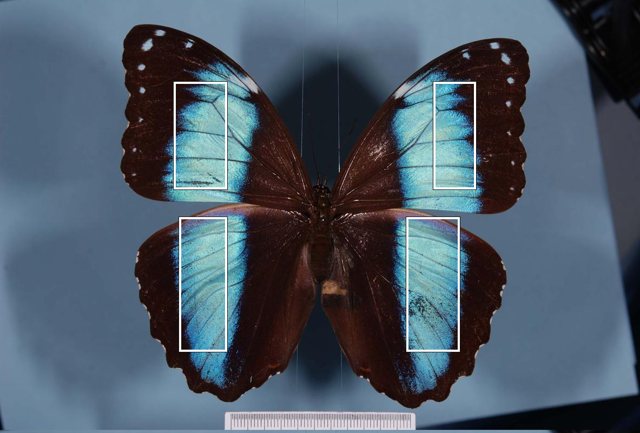
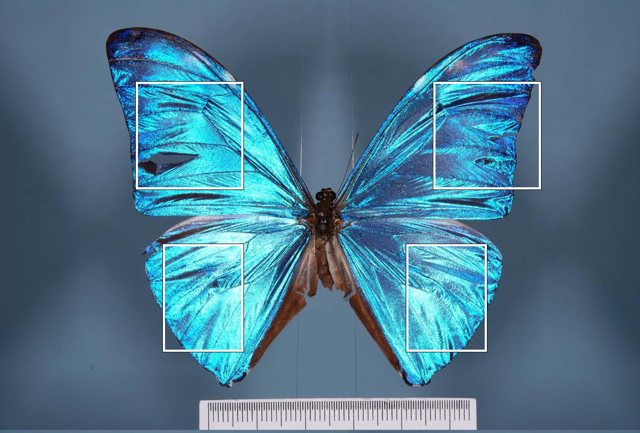
Shade 1 of 20
Morpho achilles
Yale Peabody Museum YPM ENT 416952 · Peru
#6AACADL* 66.2 · C* 21.9 · h 199.1°
Standard name light bluish green (close, 4.3)
Werner No. 34, Greyish Blue (fair, 9.5)
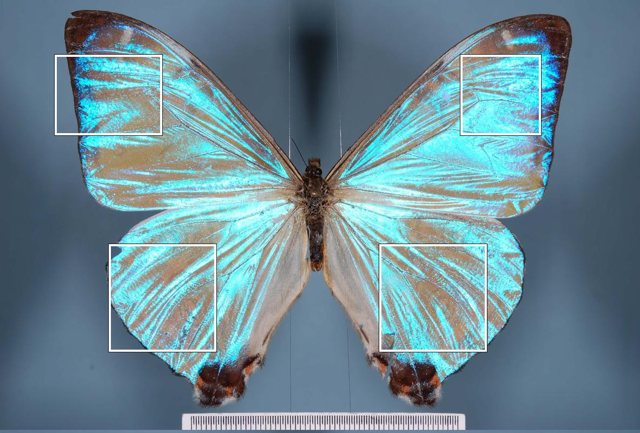
Shade 2 of 20
Morpho sulkowskyi
Yale Peabody Museum YPM ENT 417206 · Ecuador
#79CFD2L* 78.1 · C* 27.0 · h 200.9°
Standard name very light greenish blue (fair, 7.1)
Werner No. 34, Greyish Blue (no near name, 17.3)
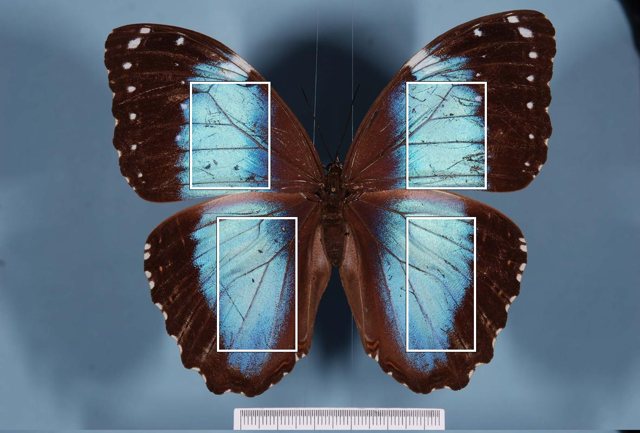
Shade 3 of 20
Morpho helenor
Yale Peabody Museum YPM ENT 417090 · Bolivia (Plurinational State of)
#82B9BEL* 71.7 · C* 18.6 · h 206.5°
Standard name light greenish blue (fair, 6.7)
Werner No. 34, Greyish Blue (no near name, 12.9)
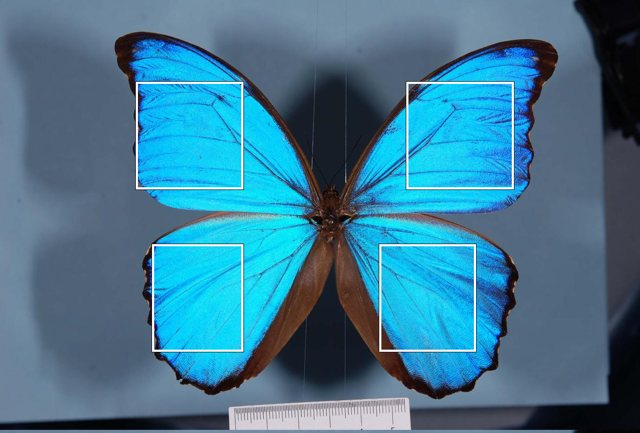
Shade 4 of 20
Morpho marcus
Yale Peabody Museum YPM ENT 417103 · Brazil
#3FB2CAL* 67.4 · C* 32.5 · h 221.6°
Standard name light greenish blue (close, 4.5)
Werner No. 31, Berlin Blue (no near name, 12.4)
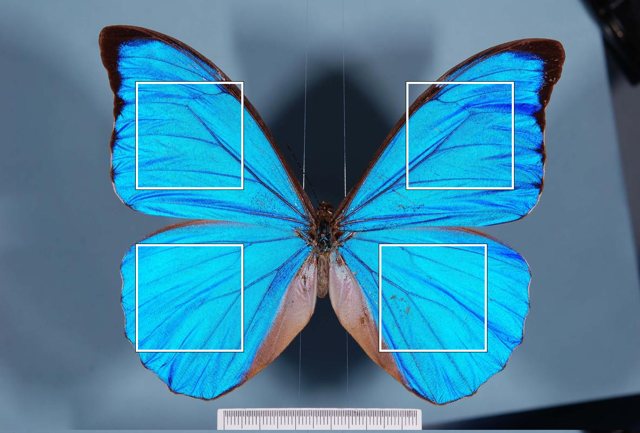
Shade 5 of 20
Morpho menelaus
Yale Peabody Museum YPM ENT 417111 · Peru
#11CAEDL* 75.1 · C* 40.8 · h 225.0°
Standard name light greenish blue (no near name, 10.2)
Werner No. 31, Berlin Blue (no near name, 18.8)
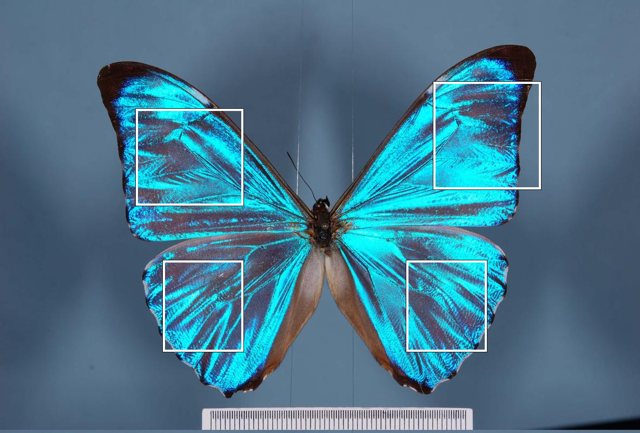
Shade 6 of 20
Morpho anaxibia
Yale Peabody Museum YPM ENT 416994 · Brazil
#0CC4E7L* 73.1 · C* 40.1 · h 225.7°
Standard name light greenish blue (fair, 9.0)
Werner No. 31, Berlin Blue (no near name, 17.5)
Shade 7 of 20
Morpho aurora
Yale Peabody Museum YPM ENT 417002 · Peru
#3388A5L* 53.0 · C* 27.8 · h 235.2°
Standard name vivid greenish blue (close, 3.0)
Werner No. 30, Flax-flower Blue (close, 4.8)
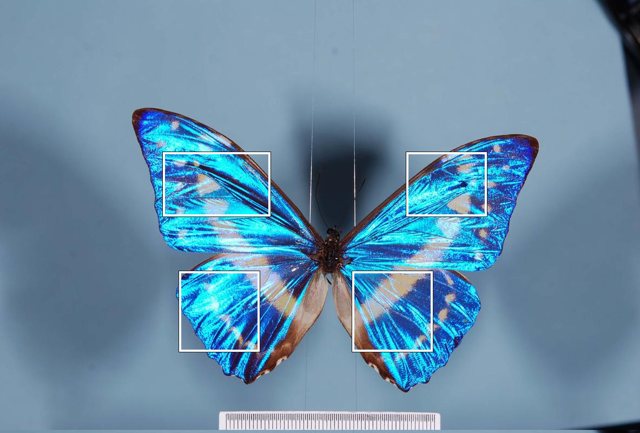
Shade 8 of 20
Morpho cypris
Yale Peabody Museum YPM ENT 417009 · Peru
#2AA1CAL* 61.9 · C* 35.1 · h 239.1°
Standard name vivid blue (close, 3.4)
Werner No. 29, Ultramarine Blue (fair, 9.1)
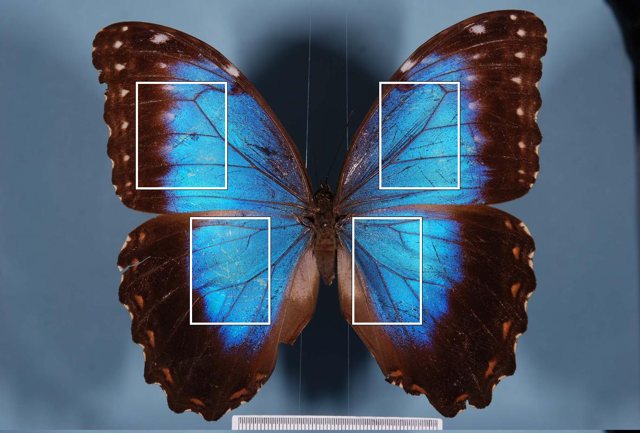
Shade 9 of 20
Morpho peleides
Yale Peabody Museum YPM ENT 417180 · Mexico
#3798C1L* 59.1 · C* 32.8 · h 243.4°
Standard name vivid blue (fair, 5.3)
Werner No. 29, Ultramarine Blue (fair, 6.8)
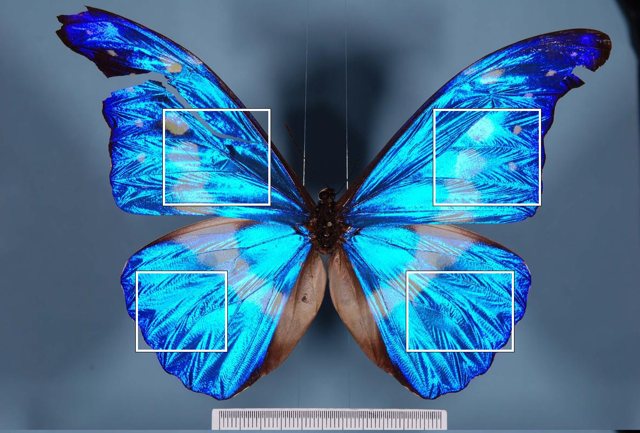
Shade 10 of 20
Morpho rhetenor
Yale Peabody Museum YPM ENT 417200 · Peru
#11A9DFL* 64.8 · C* 40.8 · h 245.8°
Standard name vivid blue (fair, 6.7)
Werner No. 29, Ultramarine Blue (no near name, 11.1)
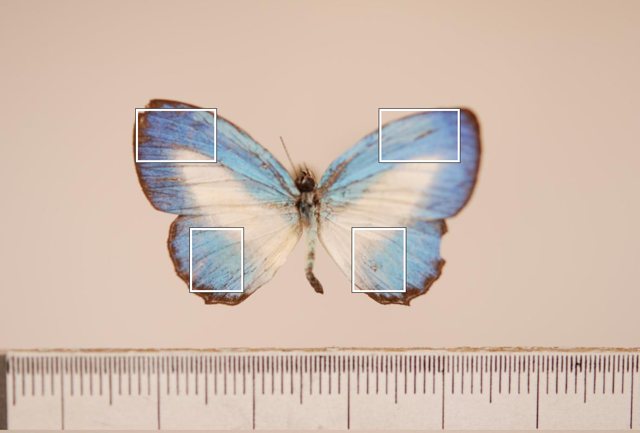
Shade 11 of 20
Jamides malaccanus
Yale Peabody Museum YPM ENT 752892 · Papua New Guinea
#8EA8BFL* 67.7 · C* 15.2 · h 255.8°
Standard name pale blue (close, 4.0)
Werner No. 29, Ultramarine Blue (fair, 9.4)
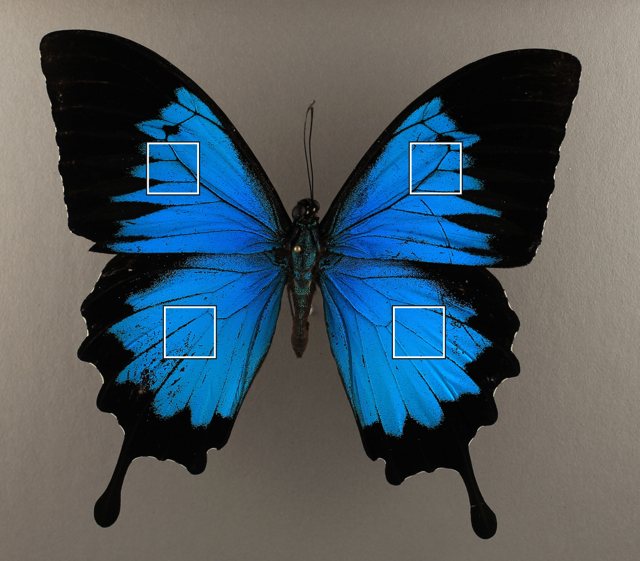
Shade 12 of 20
Papilio ulysses autolycus
Virginia Tech Insect Collection VTEC000000537 · Papua New Guinea
#037FDBL* 52.2 · C* 55.2 · h 275.7°
Standard name brilliant blue (fair, 8.6)
Werner No. 29, Ultramarine Blue (fair, 9.5)
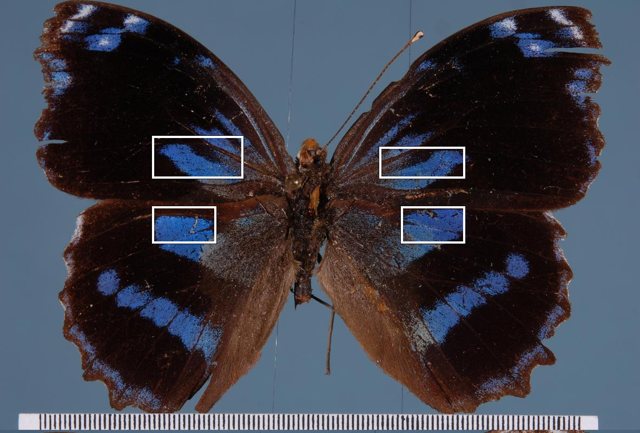
Shade 13 of 20
Myscelia cyananthe
Yale Peabody Museum YPM ENT 819713 · Mexico
#2C4D7EL* 32.6 · C* 31.7 · h 278.4°
Standard name deep blue (fair, 6.2)
Werner No. 27, China Blue (fair, 6.1)
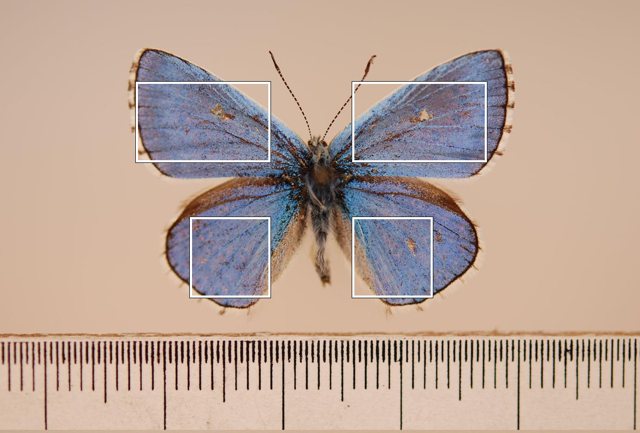
Shade 14 of 20
Polyommatus bellargus
Yale Peabody Museum YPM ENT 751426 · Greece
#6883BBL* 54.8 · C* 32.8 · h 279.4°
Standard name brilliant purplish blue (close, 4.4)
Werner No. 29, Ultramarine Blue (fair, 7.9)
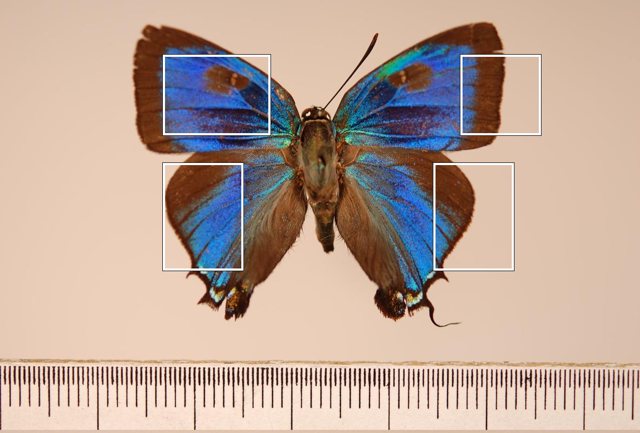
Shade 15 of 20
Atlides halesus
Yale Peabody Museum YPM ENT 751542 · United States of America
#3265CFL* 44.9 · C* 63.1 · h 288.8°
Standard name moderate blue (fair, 6.5)
Werner No. 26, Indigo Blue (no near name, 13.8)
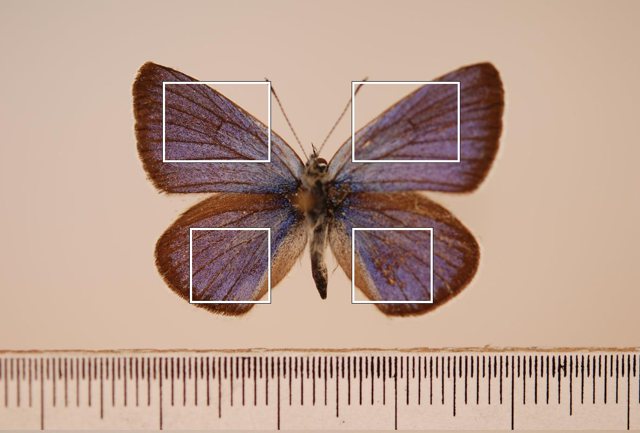
Shade 16 of 20
Polyommatus semiargus
Yale Peabody Museum YPM ENT 751361 · Greece
#645F8EL* 42.5 · C* 28.5 · h 297.6°
Standard name moderate purplish blue (fair, 6.1)
Werner No. 27, China Blue (no near name, 14.6)
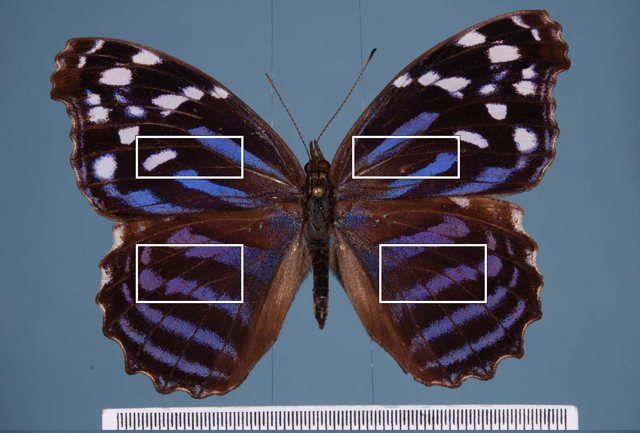
Shade 17 of 20
Myscelia ethusa
Yale Peabody Museum YPM ENT 815596 · Mexico
#473F6CL* 29.4 · C* 29.1 · h 300.8°
Standard name moderate purplish blue (fair, 6.5)
Werner No. 25, Prussian Blue (no near name, 10.2)
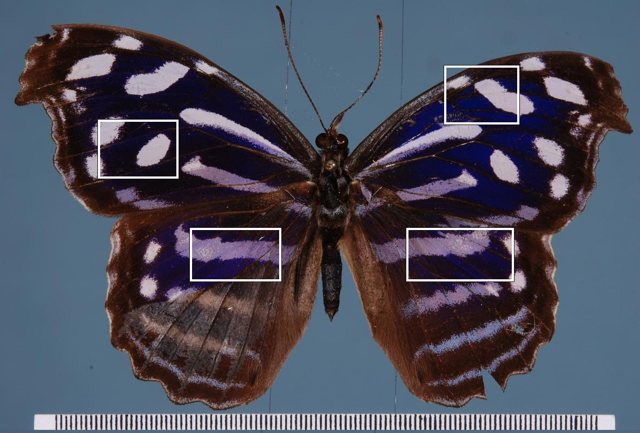
Shade 18 of 20
Myscelia cyaniris
Yale Peabody Museum YPM ENT 819711 · Belize
#32234CL* 17.5 · C* 28.8 · h 307.4°
Standard name dark violet (close, 3.3)
Werner No. 25, Prussian Blue (fair, 9.6)
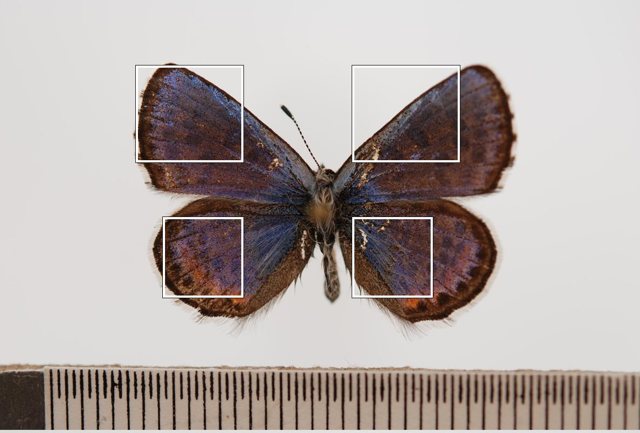
Shade 19 of 20
Euphilotes battoides
Yale Peabody Museum YPM ENT 734118 · Canada
#4F4354L* 30.2 · C* 12.0 · h 316.7°
Standard name dark grayish purple (close, 2.6)
Werner No. 24, Scotch Blue (fair, 9.8)
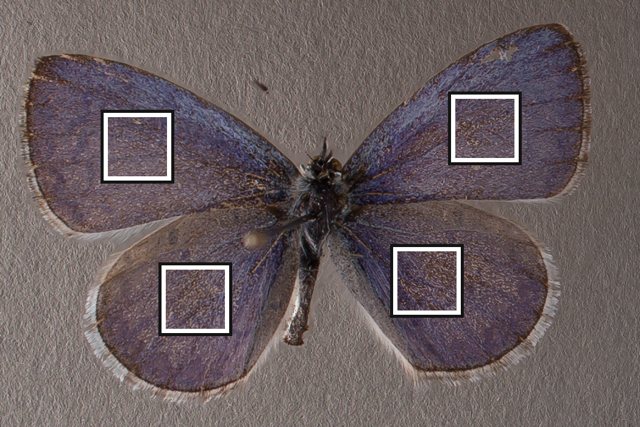
Shade 20 of 20
Celastrina neglecta
Virginia Tech Insect Collection VTEC000000879 · United States of America
#584E5CL* 34.6 · C* 9.7 · h 316.8°
Standard name dark purplish gray (close, 4.7)
Werner No. 24, Scotch Blue (no near name, 12.2)