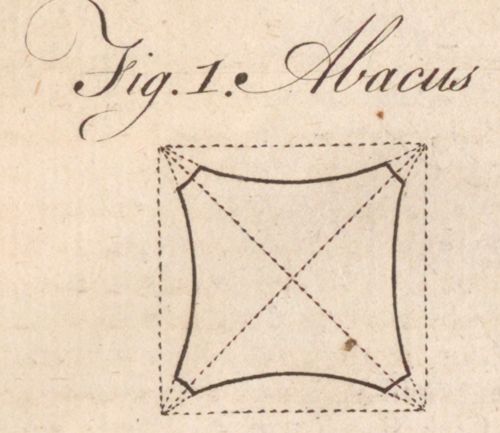
Fig. 1. Abacus
Entry: ABACUS, in architecture · Page 2
Example: an old printed book
Volume 1 of the first edition, Edinburgh 1771, came in as 832 page scans from the National Library of Scotland. It went back as 5,350 entries, one row each, with its page, its picture and its rights.
The engraved plates were cut into single figures, and each figure was tied to the entry it illustrates.
832
page scans in
5,350
entries out, one row each
6
figures cut from Plate I, each named
2
rights on every entry: one for the text, one for the scan
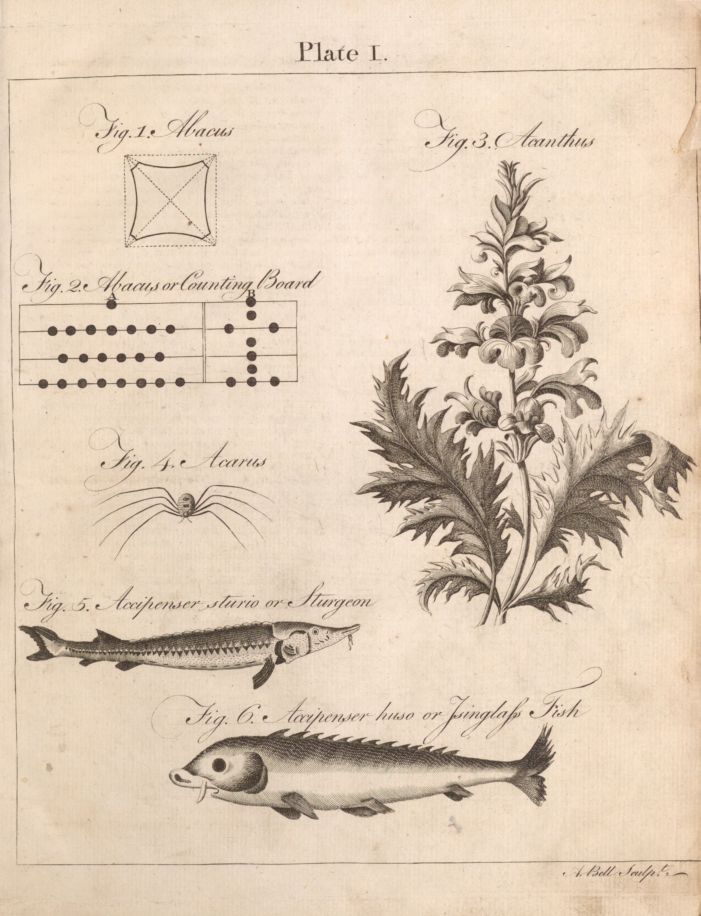
Before
After
Each one is its own record, with the entry that cites it. Where the entry text was machine-read, the long s has been put right.
Fig. 1. Abacus
Entry: ABACUS, in architecture · Page 2
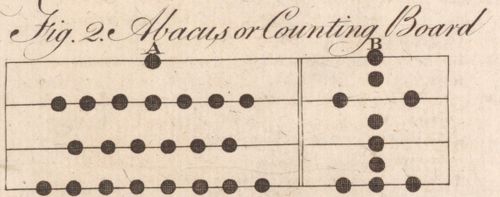
Fig. 2. Abacus or Counting Board
Entry: ABACUS · Page 2
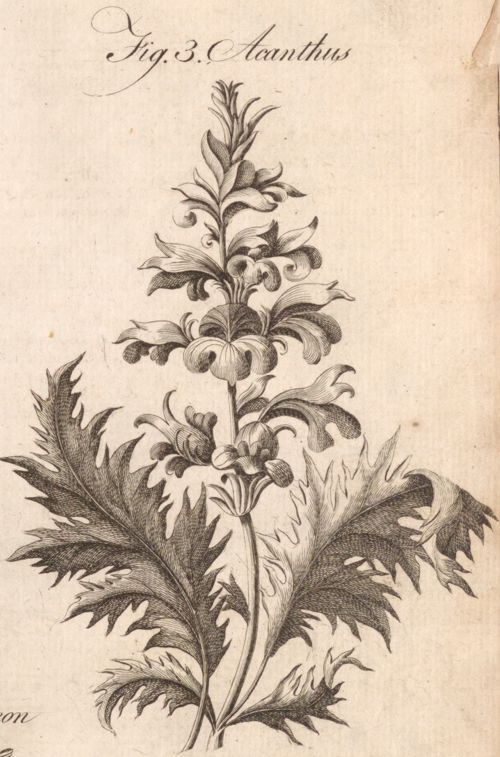
Fig. 3. Acanthus
Entry: ACANTHUS · Page 12 · GBIF 3173198
As machine-read: ACANTHUS, bears-breach, or brank-urfine, in botany, a genus of plants belonging to the didynamia angiofpermia clafa.
With the long s read as s: ACANTHUS, bears-breach, or brank-ursine, in botany, a genus of plants belonging to the didynamia angiospermia class.
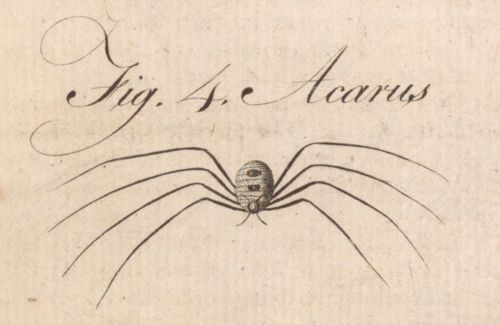
Fig. 4. Acarus
Entry: ACARUS · Page 12 · GBIF 1489076
As machine-read: ACARUS, a genus of in feds belonging to the order of aptera, or such as have no wings. The acarus has 8 legs, 2 eyes, one on eafch fide of the head
With the long s read as s: ACARUS, a genus of insects belonging to the order of aptera, or such as have no wings. The acarus has 8 legs, 2 eyes, one on each side of the head
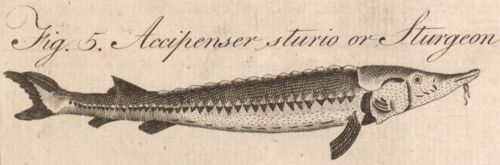
Fig. 5. Accipenser sturio or Sturgeon
Entry: ACCIPENSER · Page 14 · GBIF 2402203
As machine-read: ACCIPENSER, in ichthyology, a genus of filhes belonging to the Amphibia Nantes of Linnasus. The accipenfer has a fmgle linear noftril
With the long s read as s: ACCIPENSER, in ichthyology, a genus of fishes belonging to the Amphibia Nantes of Linnæus. The accipenser has a single linear nostril
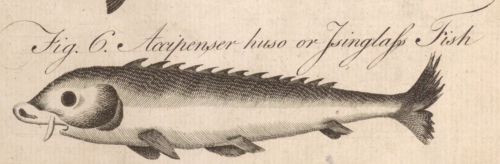
Fig. 6. Accipenser huso or Isinglass Fish
Entry: ACCIPENSER · Page 14 · GBIF 2402105 (now Huso huso, the beluga)
The library’s text layer, read against the page image.
| Machine read | On the page | Note |
|---|---|---|
fall | fast | three times |
Ratilbon | Ratisbon (Regensburg) | |
dedroy | destroy | |
locults | locusts | |
ABACRE | ABÆRE | |
Jiern, dern | stern | |
mizzen-mad | mizzen-mast |
The National Library of Scotland’s scans of volume 1 came in as 832 page images with the library’s machine reading. They went back as 5,350 entries, one row each, with the page, a link to the page image and the rights for the text and the image.
Yes. Eighteenth-century type uses the long s, which machines read as f, and worn letters cause other misreadings. We read the text against the page image and correct it, and every row says whether its text has been corrected by hand.
Yes. Each figure on a plate is cut out as its own image, named, tied to the entry that cites it and, for plants and animals, matched to GBIF.
Send us the scans. We turn them into entries, figures and corrected text, with the rights on every row.